Grape identities3 min read
Cabernet Sauvignon often arrives with words such as firm, structured and dark-fruited. Those words describe different aspects of a wine. Understanding their jobs lets you read more precisely without assuming that every Cabernet Sauvignon has the same texture or needs years in a cellar.
Read the guide ↗
Grape identities3 min read
Calling Merlot soft can be a useful first impression, but it becomes misleading when used as a complete definition. Merlot appears in varied wines and blends. Read its descriptions by separating texture, fruit language and the particular wine being discussed.
Read the guide ↗
Grape identities3 min read
Two wines can share the word Cabernet while naming different grapes. Cabernet Franc deserves its own entry in a beginner’s notebook. Learn to recognise its full name, its role in a blend and the difference between a variety description and a particular wine’s identity.
Read the guide ↗
Grape identities3 min read
Pinot Noir is associated with red wine, yet the colour of the finished wine is also a question of production. The Bourgogne wine board’s explanation of clear juice and coloured skins offers a practical way to separate grape identity from wine colour.
Read the guide ↗
Grape identities3 min read
Gamay often appears beside Beaujolais Nouveau, but these words answer different questions. A useful beginner’s exercise separates the grape, the geographical name and the particular production or release description, leaving room for more than one expression of the same variety.
Read the guide ↗
Grape identities3 min read
Syrah and Shiraz name the same grape, but a name alone cannot divide all examples into two guaranteed styles. Wine Australia’s overview shows variation across regions and winemaking choices. Identify the grape first, then read the rest of the description.
Read the guide ↗
Grape identities3 min read
Grenache and Garnacha appear across regional wine writing. Learning the connection helps, but the surrounding words still matter: a grape description, a blend composition and a regional category are different statements. Read each at the level of detail it supplies.
Read the guide ↗
Regional questions3 min read
Sangiovese names a grape; Chianti Classico names a defined wine denomination. Their relationship can obscure that distinction. Reading the consortium’s category information provides a practical exercise in separating a grape from a place-linked wine name and its additional category terms.
Read the guide ↗
Regional questions3 min read
Rioja is closely associated with Tempranillo, yet its official red-grape guide lists several varieties. This makes the region a useful place to practise reading dominant associations without converting them into absolute definitions, exact blend percentages or universal flavour promises.
Read the guide ↗
Regional questions3 min read
Nebbiolo descriptions often emphasize place and structure. A useful introduction keeps the grape visible while asking how specific the origin statement actually is. This avoids treating an entire region as one uniform site or turning a general ageing reputation into a countdown.
Read the guide ↗
Regional questions3 min read
Barbera is a grape name that can be confused with other Italian wine words beginning with similar sounds. Slow reading is more useful than guessing from the opening syllable. Build a small index that separates the grape from complete wine and place names.
Read the guide ↗
Regional questions3 min read
Dolcetto’s name can tempt a beginner to predict the sweetness of the finished wine. A grape name and a wine’s sugar-related description are different information. Use this variety to practise resisting a linguistic shortcut and finding the statement that actually answers the question.
Read the guide ↗
Regional questions3 min read
Malbec is strongly associated with Argentina, but a national identity is not a single vineyard description. The Argentine wine body’s guide discusses regional variation. Use Malbec to learn how broad origin statements differ from precise site claims and from actual sensory observations.
Read the guide ↗
Grape identities3 min read
An unfamiliar grape name can look like a gap that must be filled immediately. Argentine Bonarda offers a better lesson: start with the named regional context, learn what the source actually establishes and avoid equating similar names across countries without evidence.
Read the guide ↗
Blends and methods3 min read
Blend vocabulary can sound like a recipe, yet a named blending tradition does not establish one universal set of percentages. Learn to read a red Bordeaux-style description by distinguishing components, proportions and origin, then use a fictional composition to practise the arithmetic.
Read the guide ↗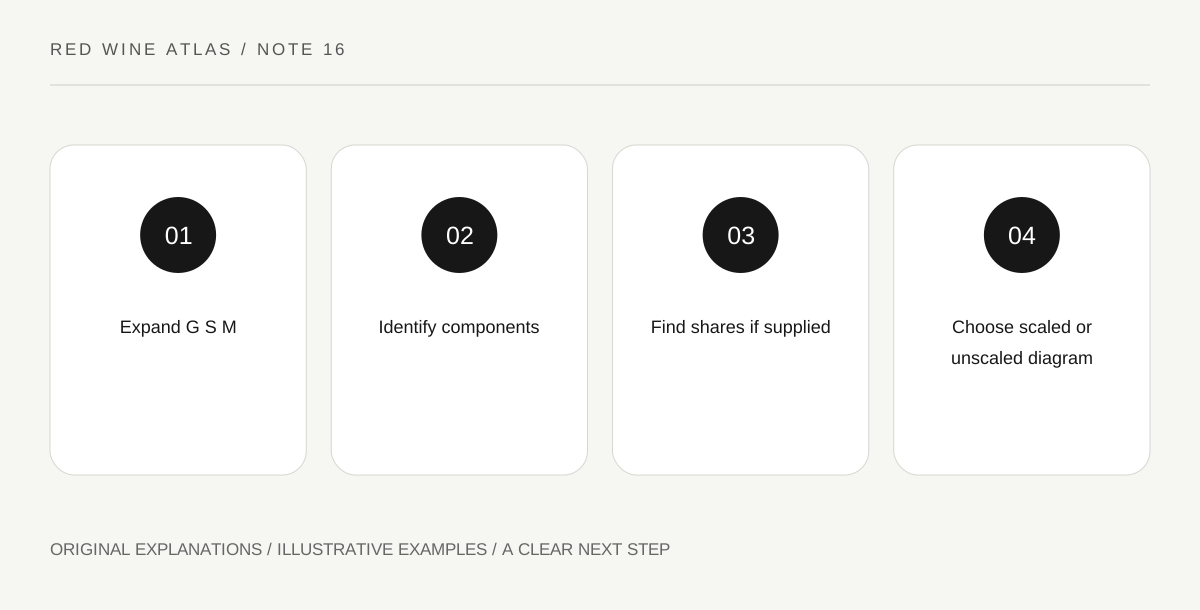
Blends and methods3 min read
GSM is a convenient abbreviation for a familiar three-grape blend, but the letters do not contain a percentage formula. Use the abbreviation to recognize the components, then look for the actual composition and the naming conventions used by the source.
Read the guide ↗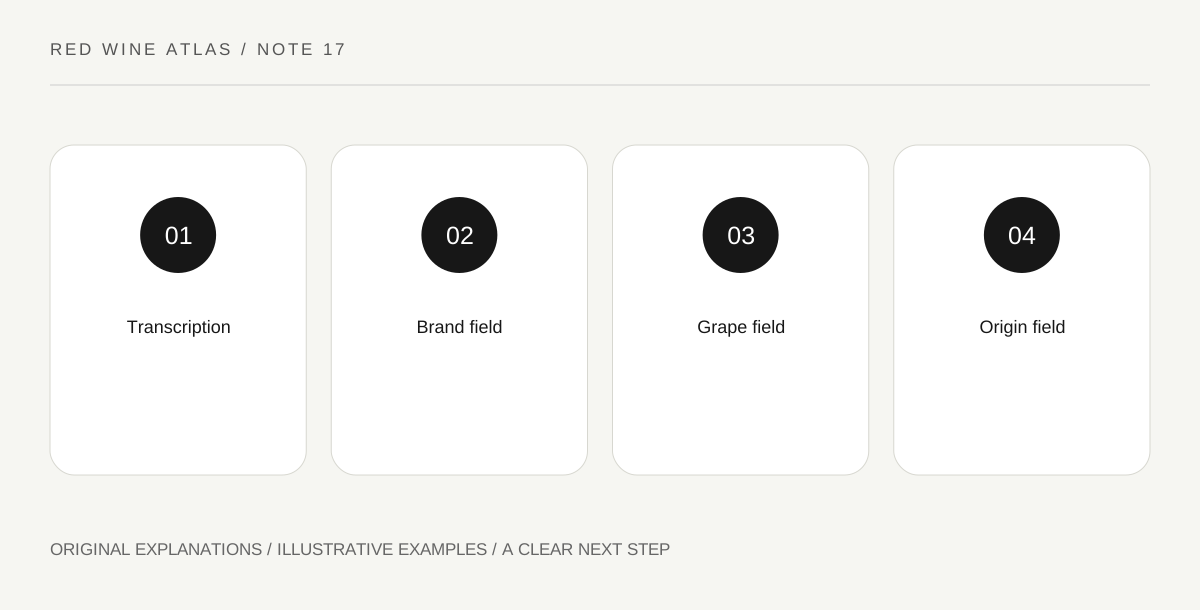
Label literacy3 min read
A wine label can put a large invented brand name beside a grape and a geographical designation. Size and typography do not tell you which role each phrase plays. Practise identifying the fields before interpreting what the complete label communicates.
Read the guide ↗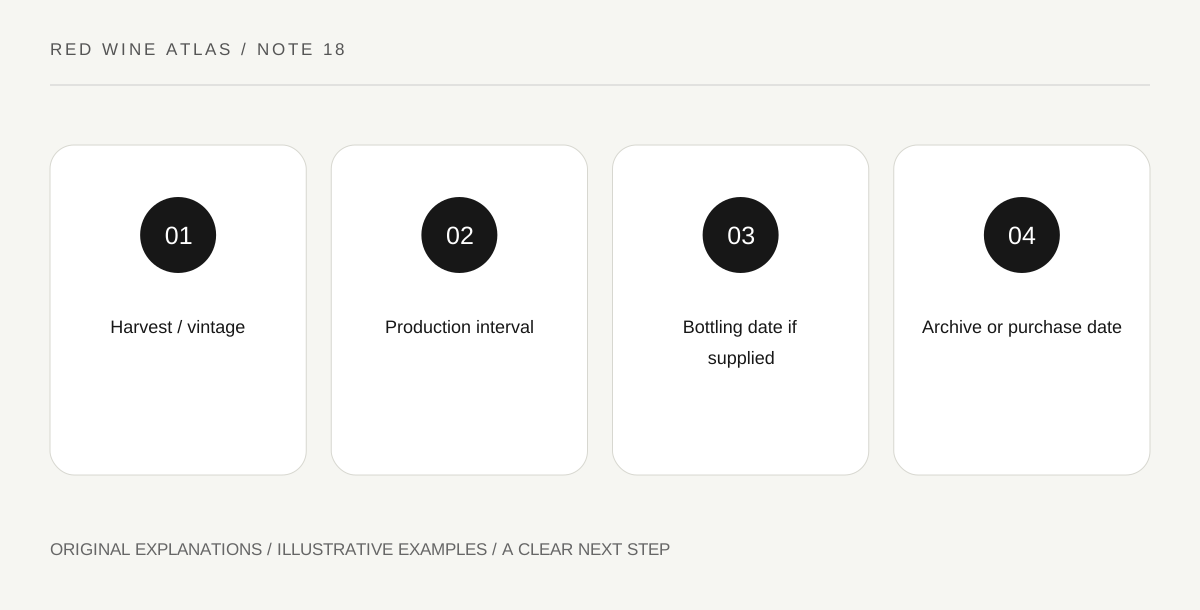
Label literacy3 min read
A year on a wine label can be mistaken for a bottling date, a purchase date or the start of a countdown. Learn what vintage means, then separate it from other dates that may appear in a producer’s information or an archive record.
Read the guide ↗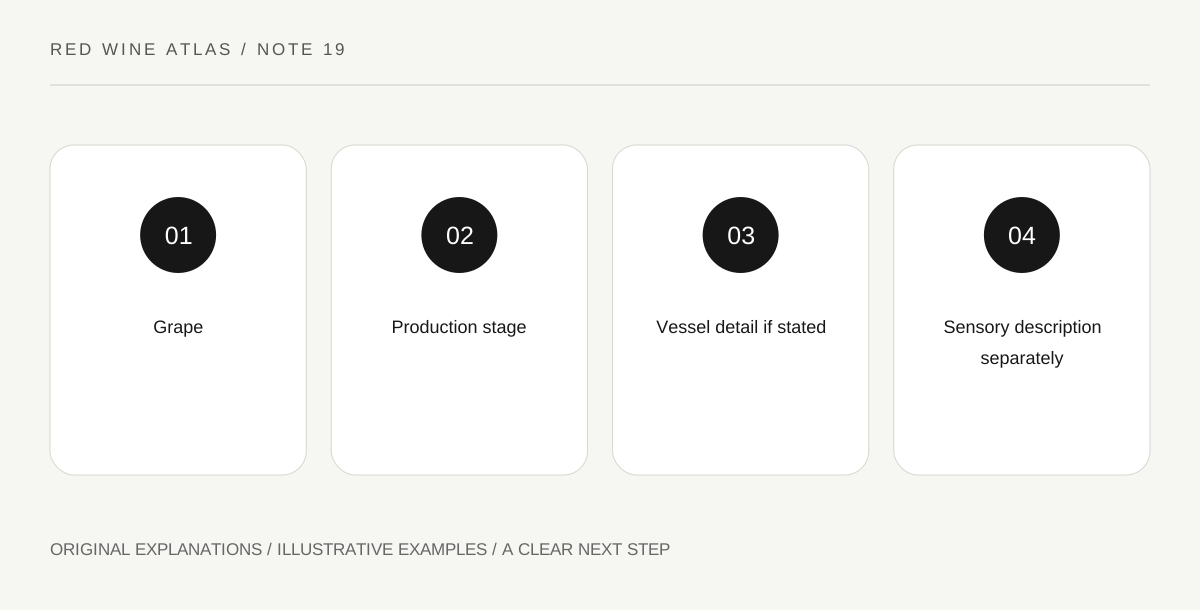
Label literacy3 min read
Wine descriptions may place oak words beside grape names and aroma comparisons. Those statements operate at different levels. Learn to distinguish a documented maturation choice from a sensory association and avoid treating a barrel-related phrase as a complete definition of a red wine.
Read the guide ↗
Blends and methods3 min read
Carbonic and semi-carbonic appear in descriptions of red-wine production, especially in discussion of Beaujolais. They are method terms. Understanding the distinction between a process name, a grape and a finished sensory description makes these passages easier to read without inventing a production recipe.
Read the guide ↗