Dolcetto: a sweet-sounding name is not a sugar statement
Dolcetto’s name can tempt a beginner to predict the sweetness of the finished wine. A grape name and a wine’s sugar-related description are different information. Use this variety to practise resisting a linguistic shortcut and finding the statement that actually answers the question.
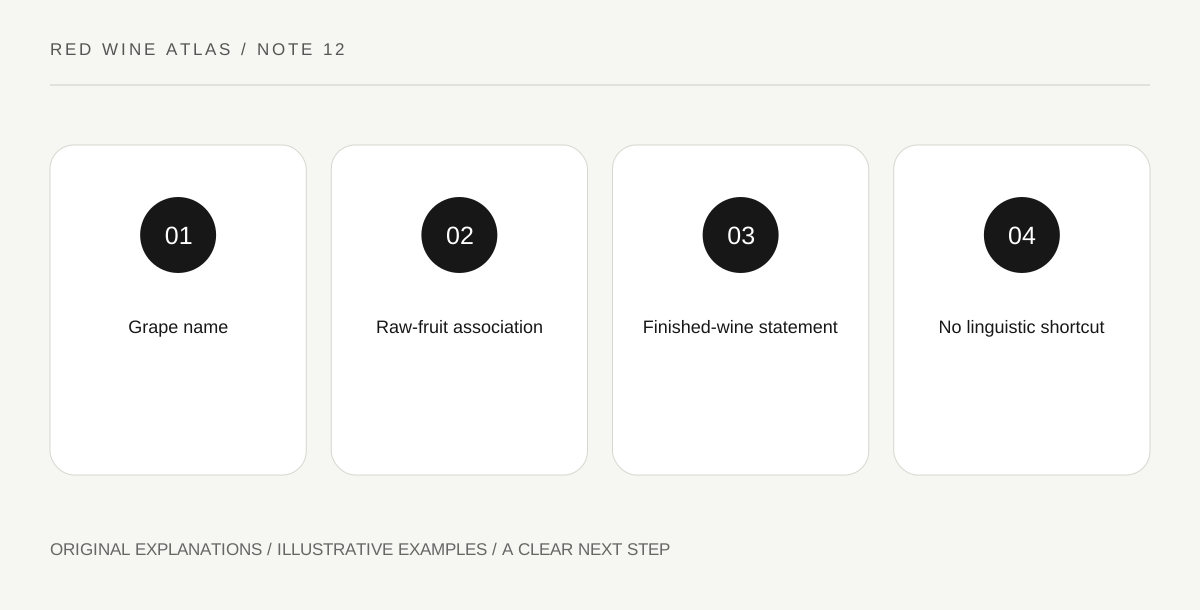
Original explanatory diagram. Read the full method and limitations below.
A name can preserve a fruit association
The Langhe consortium connects Dolcetto’s name with the sweetness of the grape’s flesh, while discussing finished wines that are not simply sweet by definition. The important distinction is between raw fruit and the wine made from it. Do not translate a suggestive name directly into an analytical statement about the finished product. On paper, draw separate boxes for grape, production and wine description. The name belongs with the first box. Any statement about the resulting wine belongs with the last and needs its own support. This simple separation is enough to correct the most tempting shortcut.
Distinguish aroma from sweetness as well
A description containing ripe fruit or a dessert-like association can create another shortcut. Those words may refer to aroma rather than sugar. Ask what dimension the writer is describing. Is the statement about smell, flavour resemblance, texture or sweetness? If the dimension is unclear, preserve the wording without translating it into a numerical or categorical sugar claim. A precise paraphrase might say the writer uses ripe-fruit language but does not supply a sweetness category here. The purpose is not to deny the description; it is to avoid making it answer a question it did not explicitly address.
Read a specific product description
A grape overview cannot establish the exact composition of every finished product carrying its name. For an educational worksheet, provide a fictional technical card with separate fields for variety and sweetness description. Ask readers to match each field to its question before interpreting either. When no sweetness information is given, uncertainty is an accurate result. Do not fill the field from the grape’s sound, a label illustration of fruit or another wine encountered previously. The task teaches targeted retrieval: use the statement about the property you want to know, rather than the most memorable word elsewhere on the page.
Build a reusable language test
The reasoning generalizes beyond this one name. A word can have an etymology, a historical association and a current technical role without those meanings being identical. Test a proposed inference by stating it fully: because this grape name sounds sweet, the finished wine must be sweet. Then identify the missing link. No actual finished-wine evidence appears in that argument. Replace it with a narrower conclusion about what the name suggests linguistically. This exercise improves interpretation without requiring a tasting or purchase. It also keeps evocative vocabulary available for learning while preventing it from taking the place of a product-specific statement.
Keep both fields visible whenever explaining the example to another learner.
Illustrative study exercise
A fictional card reads Dolcetto, red wine, with a separate producer description that says dry. A learner crosses out dry because the grape name sounds sweet. Restore both fields. They refer to different things: the variety’s name and this fictional wine’s sweetness description. No contradiction needs to be solved by deleting either statement.
Practical checks
Optional checkboxes save only in this browser.
Questions that come up
Does Dolcetto mean every wine is sweet?
No. A name’s association with grape flesh is not a finished-wine sugar statement. Read the particular wine’s description.
Can an aromatic fruit term establish sweetness?
Not by itself. First identify whether it describes aroma, a flavour comparison or sweetness. Those dimensions can be discussed separately.
References and scope
These sources support the factual background. Examples and exercises are original illustrative teaching material. References do not imply endorsement.
- Langhe: Dolcetto — Dolcetto naming and the distinction between grape flesh and finished wine; historical health claims are not used.