Sangiovese and Chianti Classico name different things
Sangiovese names a grape; Chianti Classico names a defined wine denomination. Their relationship can obscure that distinction. Reading the consortium’s category information provides a practical exercise in separating a grape from a place-linked wine name and its additional category terms.
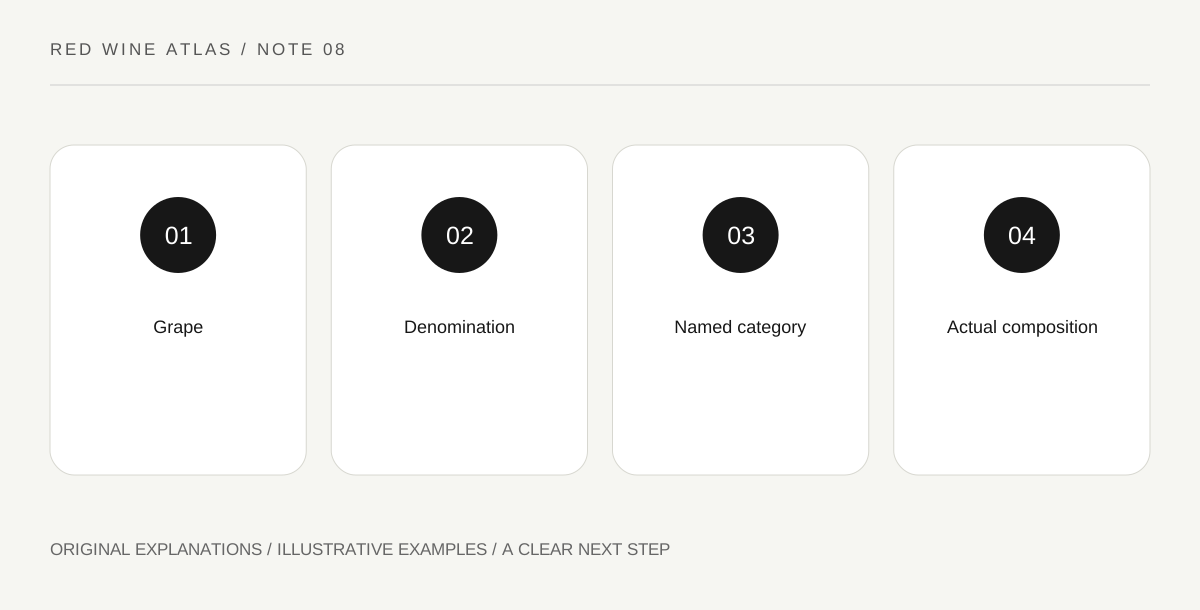
Original explanatory diagram. Read the full method and limitations below.
Keep the naming levels visible
Start with columns for grape and denomination. Put Sangiovese in the first and Chianti Classico in the second. The consortium identifies Sangiovese as central to these wines. This relationship does not make the names synonymous, because the denomination includes a regional and production context. A grape can occur in many wine descriptions, while a defined denomination refers to its particular system. This is a literacy exercise, not a complete guide to legally labelling or producing wine. Its purpose is to make several kinds of information legible on the same document.
Read the category before a condition
The consortium lists Annata, Riserva and Gran Selezione separately. Its overview gives different composition and maturation conditions for named categories. Find the exact category before applying a remembered rule to every occurrence of Chianti Classico. When comparing information, copy the category heading with the condition underneath it. An isolated number loses meaning when detached from its subject. If precise current requirements matter, recheck the official category source rather than relying on an introduction. The useful skill is matching the statement to the category it actually describes, including any qualifications beside it.
Do not turn minimum into exact composition
A minimum requirement and actual composition are different statements. If a category permits a range, that does not show where a particular wine falls within it. Imagine a rule requiring at least four blue blocks in a five-block arrangement. Four blue and one red, or five blue, can both satisfy that minimum while producing different compositions. The same logical distinction helps with wine information. A denomination rule constrains possibilities but does not independently disclose an individual wine’s exact grape percentages. Keep rule and producer statement in separate rows so they cannot be accidentally exchanged.
Read prestige language separately
Category names may be accompanied by evaluative words. Separate those words from factual fields such as grape, denomination and stated maturation. A category supplies information without obligating a preference or purchase. Hide prices and promotional adjectives in a label-only exercise, then identify the denomination and category from the remaining wording. This develops recognition without converting a hierarchy into a promise about personal enjoyment. If the question is exact composition, retrieve the actual producer sheet. A familiar reputation does not supply missing percentages, and an impressive category word is not itself an ingredient list.
For a revision exercise, cover the grape field and ask whether the denomination alone supplies an exact producer composition. Then uncover it and compare the amount of information. The difference illustrates why categories and individual statements need separate spaces. Each field answers its own question.
Illustrative reading exercise
A fictional archive card reads Chianti Classico Riserva; Sangiovese 90%, other red grapes 10%. Circle Riserva as category and mark the percentages as this fictional wine’s stated composition. Do not use 90/10 as the definition of every Riserva. Compare a category summary and a specific composition statement as two different layers of information.
Practical checks
Optional checkboxes save only in this browser.
Questions that come up
Is Sangiovese another name for Chianti Classico?
No. One is a grape and one a denomination. Their close relationship does not remove that distinction.
Does a category minimum reveal a complete blend?
No. It constrains possibilities. Actual percentages require a separate statement about the particular wine.
References and scope
These sources support the factual background. Examples and exercises are original illustrative teaching material. References do not imply endorsement.
- Chianti Classico: types — Chianti Classico’s separately named categories and Sangiovese composition context.