Carbonic language describes a method, not a grape
Carbonic and semi-carbonic appear in descriptions of red-wine production, especially in discussion of Beaujolais. They are method terms. Understanding the distinction between a process name, a grape and a finished sensory description makes these passages easier to read without inventing a production recipe.
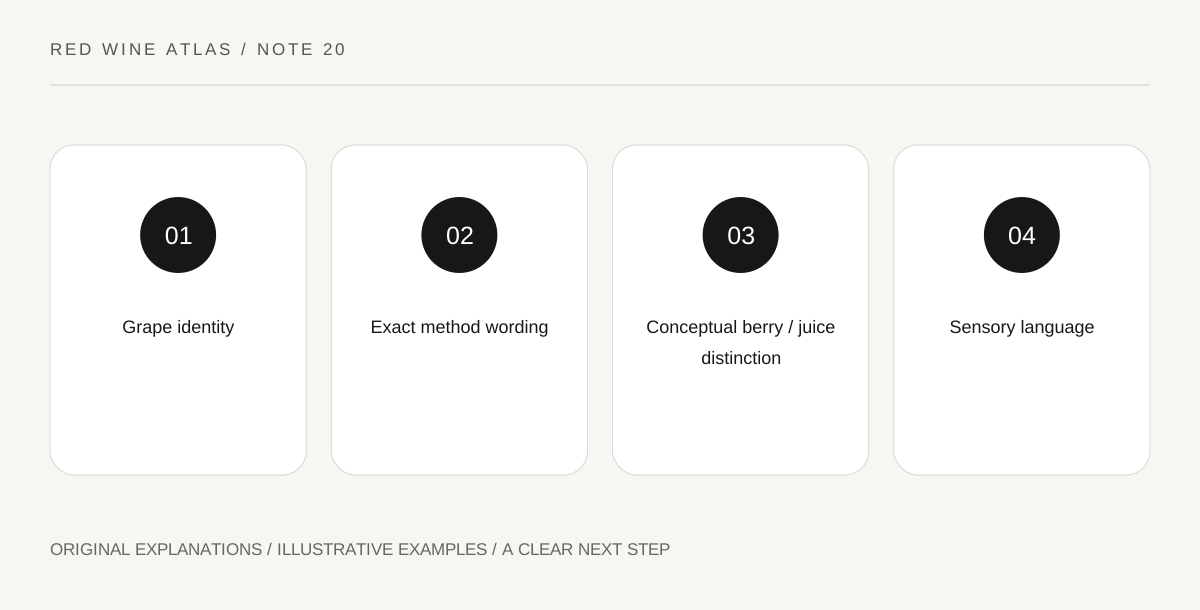
Original explanatory diagram. Read the full method and limitations below.
Keep the method outside the grape field
Gamay names a grape, while semi-carbonic maceration names a production approach described by Inter Beaujolais. A method word should therefore sit in a process field. It does not replace the grape or establish a geographical origin by itself. Start an educational diagram with separate labels for fruit identity and process statement. Connect them only for the example the source actually discusses. This makes the relationship visible without implying that every Gamay follows the same procedure or that every occurrence of a method term belongs to one specific regional wine category.
Understand the two kinds of activity
The regional explanation describes intact berries undergoing internal activity in a carbon-dioxide-rich environment while juice released elsewhere in the vat undergoes yeast-driven alcoholic fermentation. For a conceptual illustration, draw an intact-berry zone and a free-juice zone. The important lesson is that a vat can involve more than one activity; the process is not accurately pictured as every berry following one identical path. This is an explanatory sketch, not operational advice. It supplies no vessel specification, timing, gas-handling instruction or procedure for home production. The sketch helps readers understand the description’s distinctions without converting it into a recipe.
Do not collapse neighbouring method words
Inter Beaujolais distinguishes its semi-carbonic description from traditional carbonic maceration, including how the carbon-dioxide environment arises in its account. Preserve the exact term supplied by a producer rather than replacing every appearance with the shortest familiar word. If a document says semi-carbonic, record semi-carbonic. If it says only carbonic, do not add unstated details from another source’s example. A glossary can link the terms as related while keeping separate entries. This is the same reading discipline used for related grape names: a connection is useful, but an equals sign may erase the distinction the writer intended.
Keep process and sensory outcome separate
A profile may discuss fruity aromas alongside a process explanation. That association does not make a particular aroma mandatory in every example or turn a flavour comparison into proof of the method. Use two arrows in your diagram: one to the stated process and one to the writer’s sensory description. Do not reverse the second arrow into a production diagnosis. For a document exercise, remove the method phrase and ask whether the remaining adjectives can establish it uniquely. They cannot. The missing statement should remain missing rather than being reconstructed from a familiar reputation or a single memorable fruit association.
Keep the conceptual sketch beside the source’s terminology so its limits remain clear.
Illustrative document exercise
A fictional worksheet labels Gamay as process and semi-carbonic as grape. Correct the labels, then draw separate berry and juice zones to summarize the cited conceptual explanation. Add a third field for sensory language. The corrected page now distinguishes plant identity, a method statement and a descriptive impression without claiming that any one field completely predicts the others.
Practical checks
Optional checkboxes save only in this browser.
Questions that come up
Is semi-carbonic a grape variety?
No. It is a production-method term in the explanation discussed here. Gamay is the grape name.
Can fruity language prove carbonic production?
No. A sensory adjective does not uniquely establish a method. Look for an actual production statement rather than reversing an association into proof.
References and scope
These sources support the factual background. Examples and exercises are original illustrative teaching material. References do not imply endorsement.
- Inter Beaujolais: vinification — Gamay and the conceptual distinction between semi-carbonic and carbonic vinification.