Grape, origin and brand: sort three label fields
A wine label can put a large invented brand name beside a grape and a geographical designation. Size and typography do not tell you which role each phrase plays. Practise identifying the fields before interpreting what the complete label communicates.
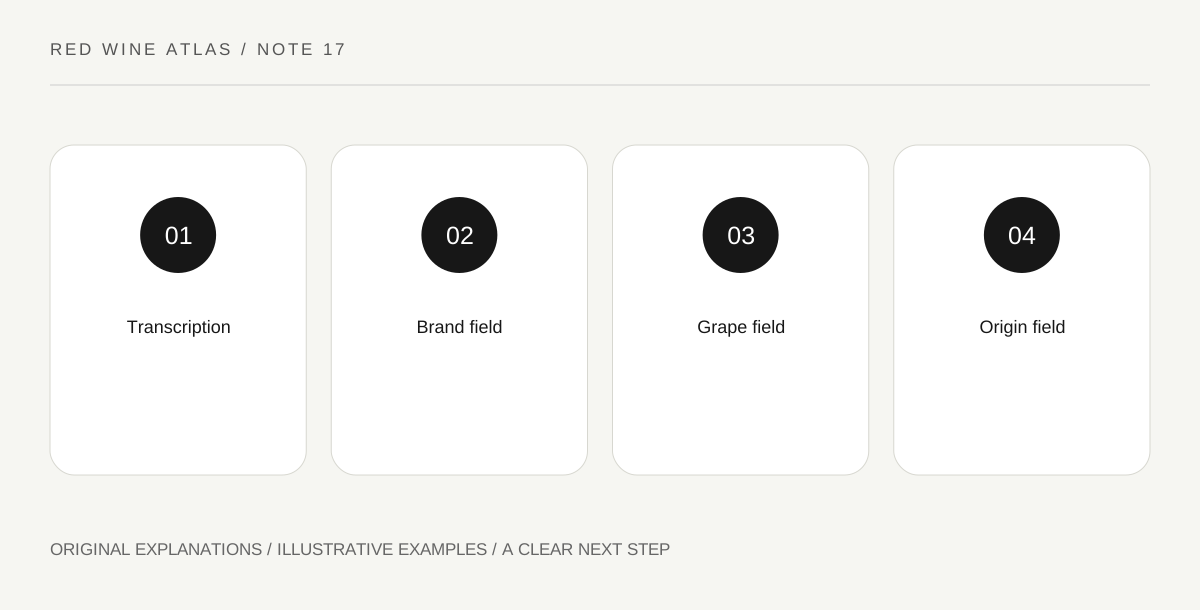
Original explanatory diagram. Read the full method and limitations below.
Transcribe before classifying
Begin by copying the exact words from a fictional label, including smaller explanatory text. Then make three columns for brand, grape designation and origin. A large word may be a brand rather than a place; a smaller phrase may supply the actual origin information. Do not classify by visual prominence alone. The US TTB label guide distinguishes these fields in its own regulatory context. Use that distinction as a reading aid while remembering that an introductory worksheet is not a worldwide legal compliance review. A transcription preserves evidence even when your first interpretation of a name turns out to be wrong.
Ask what each field answers
A brand answers which commercial identity is being presented. A grape field identifies a named variety or varieties. An appellation of origin supplies geographical information about the agricultural source in the relevant system and carries conditions within that system. These roles can be related without being interchangeable. Write each as a question before filling the column: who presents it, which grape is named, where is the origin stated? This technique is especially useful when a brand evokes a landscape. A mountain illustration or a geographical-sounding brand should not silently replace the actual origin statement underneath it.
Keep jurisdiction attached to rules
The TTB guide concerns US labelling requirements and includes distinctions for domestic and imported products. Do not carry an isolated condition from that guide into every country’s labels. If your task is educational reading, identifying the fields may be enough. If exact compliance is the task, the relevant current jurisdiction and product category must be checked directly. This article supplies no approval decision. The useful habit is to keep a rule’s jurisdiction beside it, just as you keep a percentage’s denominator beside a number. Removing context can make an accurately remembered sentence misleading when applied somewhere it does not belong.
Build an annotation that another reader can inspect
Use arrows from each printed phrase to the field you assigned it, then add a short reason. For an ambiguous word, use an uncertainty marker instead of forcing a classification. You can often resolve ambiguity by reading accompanying small text or the producer’s official information. Keep the resolution separate from the original transcription. A strong final annotation might identify two fields confidently and leave one unresolved. That is more informative than a fully coloured label whose categories were guessed. The exercise teaches interpretation from evidence rather than recognition from packaging aesthetics, price or a familiar-looking landscape motif.
Illustrative document exercise
A fictional label says NIGHT RIDGE in large type, Cabernet Sauvignon below it, and County A in a smaller origin line. Treat Night Ridge as the fictional brand, Cabernet Sauvignon as grape designation and County A as origin. The mountain drawing adds visual imagery but does not independently establish a vineyard location or a more precise geographical claim.
Practical checks
Optional checkboxes save only in this browser.
Questions that come up
Does the largest name always identify origin?
No. It may be a brand. Read the actual wording and explanatory fields rather than inferring meaning from type size.
Can a US label guide explain every label worldwide?
No. It is authoritative for its stated jurisdiction and context. Other systems require their own current sources.
References and scope
These sources support the factual background. Examples and exercises are original illustrative teaching material. References do not imply endorsement.
- US TTB: label anatomy — US wine-label fields and vintage as harvest-year information, within the guide’s jurisdiction.